
Introduction
The internet gives readers access to information on almost every subject. Whether someone wants to understand a technology concept, explore a business idea, learn about personal finance or find general lifestyle guidance, there are countless websites offering articles and explanations. The challenge is knowing where to begin and how to judge the information being presented.
TheSindi.com is described in online references as a multi-topic digital publication covering several areas of general interest. Its reported subject coverage includes technology, finance, business, education, health, lifestyle, law and travel. Rather than concentrating on one specialist industry, the website is presented as a place where readers can explore different subjects through informational articles and practical guides.
However, understanding a website involves more than looking at its name or category list. Readers should also consider how its content is organised, whether its articles provide useful context, how clearly its publishing identity is explained and whether important claims can be checked elsewhere.
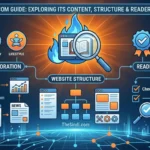
This guide explores the reported purpose and content of TheSindi.com, explains how readers can approach its articles and highlights practical checks that help distinguish useful information from claims that need further verification.
What Is TheSindi.com?
TheSindi.com is described by third-party website reviews as an independent, general-interest digital publication. Its reported positioning uses the phrase “News, Insights & Expert Guides”, suggesting an emphasis on informational articles, explainers and practical reading material.
Unlike a specialist website that focuses entirely on one subject, a multi-topic publication covers several areas. Readers may find technology-related explanations alongside business topics, educational material, health information and lifestyle articles.
This format can appeal to people who enjoy exploring different subjects from one website. It can also help readers discover topics they had not originally planned to research.
It is important, however, to distinguish a general-interest publication from a specialist authority. An article about a financial concept does not automatically make a website a financial advisory service. Similarly, publishing health or legal content does not mean that a website provides medical treatment or legal representation.
TheSindi.com should therefore be approached as an informational publication, with individual articles assessed according to their subject, sources and purpose.
What Topics Does TheSindi.com Cover?
Available third-party descriptions report a broad selection of subject areas. The precise navigation may change, and the official website could not be independently inspected during this research. The following sections explain the topics commonly associated with the domain rather than claiming that every category is currently displayed in its live menu.
1. Technology and Digital Developments
Technology is one of the subject areas frequently associated with TheSindi.com.
Technology content can help readers understand digital products, online services, software concepts and changes in the wider technology industry. It may also introduce subjects such as artificial intelligence, cybersecurity, blockchain and digital tools.
This type of content is useful for readers who want an accessible introduction before exploring a more technical resource.
For example, someone researching an unfamiliar online platform might first need to understand what it does, how it works and which features matter. A general explainer can provide that starting point.
Technology information can become outdated quickly, though. Readers should check publication dates and compare instructions with current product documentation before following technical recommendations.
2. Finance and Money-Related Information
Finance is another reported content area.
Financial articles may explain everyday money concepts, investment terminology, banking subjects or broader financial developments. Such material can help beginners become familiar with terminology that might otherwise seem difficult.
A reader researching an investment concept, for example, may benefit from a straightforward explanation of how it works and which risks deserve attention.
However, financial topics require careful evaluation. Investment products, tax rules, interest rates and banking policies can change. A general article cannot account for every reader’s financial position, goals or risk tolerance.
Use introductory content to understand a subject, then verify important details through financial regulators, official institutions or qualified advisers.
3. Business and Entrepreneurship
The business category is reported as another part of TheSindi.com’s wider subject coverage.
Business-related content can be relevant to entrepreneurs, professionals, students and people interested in how organisations operate. Possible areas of interest include business planning, company operations, entrepreneurship, workplace developments and commercial concepts.
For someone starting a business, general articles may help identify questions worth researching. They can introduce subjects such as planning, customer needs, business processes and market considerations.
Still, practical business decisions often depend on location, industry and legal requirements. Readers should verify registration, taxation, employment and compliance information through the appropriate official sources.
4. Education and Learning
Educational content can support readers who want to understand a subject, revise a concept or explore an unfamiliar area.
Online educational articles are often useful because they break larger topics into smaller explanations. A well-organised guide can introduce key terms, provide examples and help readers decide what to study next.
Students should nevertheless compare general online material with their prescribed syllabus, textbooks and official examination guidance.
An article may explain a concept clearly without covering every detail required for a particular course or assessment.
5. Health and Wellbeing
Health is also listed among the subjects associated with TheSindi.com in third-party descriptions.
Health-related content can introduce readers to general wellness topics, fitness concepts, nutrition and common health questions.
This subject area needs a higher level of caution than ordinary lifestyle reading. Medical information can affect personal decisions, and the right approach may differ depending on someone’s symptoms, medical history and circumstances.
Readers should not use a general website article to diagnose an illness, change prescribed medication or delay necessary medical attention. Consult a qualified healthcare professional when advice relates to an individual health concern.
6. Lifestyle and Everyday Topics
Lifestyle content generally covers subjects connected with daily activities, personal interests and practical living.
This category can attract readers who want accessible information outside a professional or technical subject. It may include general advice, useful ideas and topics related to everyday experiences.
The value of lifestyle articles depends on their relevance and practical detail. Readers should look for explanations that provide context rather than broad statements that cannot be applied to a real situation.
7. Law and Legal Awareness
Legal topics are another area reported in descriptions of TheSindi.com.
Articles in this category may introduce legal terminology, explain general procedures or discuss subjects that readers want to understand before seeking further information.
Legal requirements differ across countries, states and jurisdictions. Even a broadly accurate explanation may not apply to a reader’s location or circumstances.
Before acting on legal information, check the relevant legislation, government guidance or advice from a qualified legal professional.
8. Travel and Related Information
Travel is also included in reported descriptions of the website’s subject coverage.
Travel content can help readers explore destinations, understand planning considerations and discover information about different places.
However, practical travel details are time-sensitive. Visa rules, entry requirements, transport schedules, local restrictions and attraction opening hours can change.
Use travel articles for initial research, then confirm essential arrangements through official government, transport and destination sources.
How Is TheSindi.com Different From a Specialist Website?
The main difference is its reported multi-topic publishing approach.
A specialist website concentrates on a particular field. For example, a technology publication may focus on software, devices, cybersecurity and digital infrastructure. A financial publication may concentrate on banking, investment markets and personal finance.
A multi-topic website covers several subjects under one publishing identity.
This creates a different reading experience.
Broader subject selection: Readers can explore unrelated topics without moving between multiple specialist publications.
General introductions: Articles may help visitors understand the basics of a subject before they conduct deeper research.
Different reading interests: Students, professionals and casual readers may all find topics relevant to their interests.
Varied levels of complexity: A beginner-friendly lifestyle article and a technical or financial explanation may require very different levels of detail.
The format is convenient, but breadth alone does not establish expertise. Readers should assess each article on its own merits rather than assuming that the entire website has equal authority across every subject.
How to Explore TheSindi.com More Effectively
When visiting a multi-topic publication, a little planning can make browsing more useful.
Begin With a Specific Subject
Think about what you want to learn before opening several articles.
For example, if your interest is technology, focus on technology-related material rather than browsing unrelated categories. A clear subject makes it easier to identify whether an article answers your question.
Use Category Navigation
Third-party descriptions report categories such as Technology, Finance, Business, Education, Health, Lifestyle, Law and Travel.
If these sections are available in the current website navigation, they can help narrow the reading experience.
Category names are useful starting points, but they do not guarantee that every article within a section covers the same level of detail.
Search for a Specific Topic
When a website provides a search feature, use focused terms instead of broad phrases.
For instance, a search for “business planning” is likely to be more useful than entering only “business”. Specific wording helps narrow the results to the subject you actually want to explore.
Read Beyond the Headline
A headline may describe an article’s subject, but it does not reveal whether the content is detailed or well-supported.
Look at the introduction, subheadings, examples and sources. Check whether the article answers the question it promises to address.
Check When the Article Was Published
Publication dates matter, particularly for technology, finance, law, health and travel.
A guide published several years ago may still explain a basic concept correctly. Its practical instructions or regulatory information, however, may no longer be current.
Look for an updated date where available and verify time-sensitive details elsewhere.
How to Evaluate the Credibility of TheSindi.com Articles
Readers should not judge a publication only by its design, headline or search engine position. The quality of the information matters much more.
Here are some useful checks to apply when reading TheSindi.com or any other online publication.
Look for Clear Author Information
Check whether the article identifies its author and whether the website explains the person’s relevant background.
Some third-party descriptions of TheSindi.com identify an author using the name Roland or Roland Miller. These descriptions are not sufficient to establish the person’s identity, qualifications or ownership of the publication independently.
For specialist subjects, relevant expertise matters. A background in content writing, for example, is not the same as professional medical, legal or financial accreditation.
Check the Evidence Behind Important Claims
A useful article should make important claims understandable and, where appropriate, provide supporting references.
For example, an article discussing a regulation should ideally point readers towards the relevant official information. A financial explanation may benefit from references to a regulator or financial institution.
If a claim has no clear supporting evidence, do not automatically treat it as established fact.
Compare Information With Primary Sources
Primary sources provide information directly from the organisation or authority responsible for it.
Depending on the subject, useful sources include:
- Government websites for laws, policies and official procedures.
- Financial regulators for investment and consumer information.
- Banks and financial institutions for current product terms.
- Universities and examination boards for academic requirements.
- Recognised health organisations for medical information.
- Official product documentation for technical instructions.
Comparing information with primary sources is particularly important when an article could influence a financial, legal, medical or professional decision.
Check Whether the Article Separates Facts From Opinions
Some articles explain established information, while others discuss opinions, predictions or recommendations.
These are not interchangeable.
A statement supported by an official document has a different evidential basis from a prediction about a future trend. Good reading habits involve recognising that distinction.
Review the Website’s Publishing Policies
About pages, editorial policies, privacy policies and disclaimers can help visitors understand how a publication describes its purpose and practices.
Third-party reports associate several policy pages with TheSindi.com, but their current contents could not be independently checked during this research.
Readers should open the live pages themselves rather than relying on descriptions from another website.
The Importance of Privacy and Safe Browsing
Website credibility is not only about article accuracy. Visitors should also consider how they interact with a website.
Before subscribing, contacting a publisher or submitting information, review the privacy policy and check what details are being requested.
A few sensible precautions include:
- Check the spelling of the website address before opening it.
- Look for a secure HTTPS connection.
- Avoid entering passwords or financial details into an unfamiliar form.
- Do not download files unless you understand their source and purpose.
- Read the privacy policy before providing personal information.
- Use strong, unique passwords for any account you create.
- Be cautious of messages or pages that promise unrealistic rewards.
HTTPS helps protect the connection between a browser and a website, but it does not prove that every article is accurate or that a publisher is professionally qualified.
Likewise, a website’s appearance should not be treated as proof of legitimacy. Readers should assess the actual information and behaviour of the site.
TheSindi.com and Similarly Named Websites
One important point for readers is the difference between a website’s name and its complete domain.
Several websites use similar versions of the TheSindi name, including domains with different extensions or spelling variations.
For example, TheSindi.com should not automatically be confused with:
- TheSindi.co
- TheSindi.net
- TheSindiCom.com
- The-Sindi.com
These are separate web addresses. Similar branding does not establish shared ownership, management, editorial standards or services.
This distinction matters when searching for an article, following a link or contacting a publisher. Always check the complete domain in the browser address bar.
If you are looking for a particular article from TheSindi.com, use the exact domain rather than assuming that a similarly named search result belongs to the same publisher.
Who May Find TheSindi.com Useful?
A multi-topic publication can serve different readers, depending on the information they need.
General readers: People who enjoy exploring different subjects may appreciate a website that brings several content areas together.
Students: Educational explanations can provide an additional starting point for understanding a topic, alongside prescribed study material.
Professionals: Business and technology articles may introduce concepts or developments worth researching further.
Technology enthusiasts: Readers interested in digital topics may find general explainers useful when exploring unfamiliar subjects.
People researching everyday questions: Lifestyle, travel and other general-interest articles may help readers discover information relevant to daily activities.
The website may be less suitable as a standalone resource for specialist research or decisions requiring professional judgement. In those cases, use relevant authoritative sources as well.
Practical Tips for Getting More Value From Online Publications
The best way to use a multi-topic website is to approach it with a clear purpose.
- Identify your question: Know what information you need before starting your search.
- Choose a relevant subject: Focus on the category that matches your interest.
- Read the full explanation: Do not rely on the headline alone.
- Check the author: Look for relevant experience when the topic is specialised.
- Verify important claims: Compare facts with primary sources.
- Review dates: Make sure the information is current enough for your purpose.
- Avoid treating general articles as professional advice: Seek qualified help when a decision has serious consequences.
- Check the domain: Make sure you are visiting the intended website.
These habits help readers use online content more effectively, regardless of which publication they choose.
Final Thoughts
TheSindi.com is presented in third-party references as a multi-topic online publication with reported coverage across technology, finance, business, education, health, lifestyle, law and travel. Its broad subject range may appeal to readers who prefer exploring different topics from one website.
However, the value of any publication depends on more than its range of categories. Clear explanations, reliable references, transparent publishing information and up-to-date content all matter.
Readers should check the complete website address, review the author and publication date, and verify important claims through trustworthy sources. This is especially important when dealing with financial, medical, legal or technical information.
Approached with sensible research habits, a general-interest website can be a useful starting point for discovering new subjects. The key is to treat online articles as information to evaluate, not as automatic substitutes for official sources or professional advice.
What is TheSindi.com?
TheSindi.com is described in third-party website references as a general-interest digital publication covering several subjects, including technology, finance, business, education, health, lifestyle, law and travel.
What type of content does TheSindi.com publish?
Available descriptions associate the website with informational articles, explainers and practical guides. The precise content and category structure should be checked on the live website because its homepage could not be independently inspected during this research.
Is TheSindi.com a technology website?
Technology is one of the subjects reported in descriptions of TheSindi.com, but the publication is not limited to technology. Its reported coverage also includes business, finance, education, health and other general-interest topics.
Does TheSindi.com provide financial advice?
The website is described as an informational publication. Readers should not assume that its general financial articles provide personalised investment or financial advice. Consult an appropriately qualified professional for decisions about individual finances.
Can students use TheSindi.com for educational research?
Students may find general explanations useful as supplementary reading. They should compare information with textbooks, academic references, course materials and official examination guidance before using it in formal work.